Posts tonen met het label market research. Alle posts tonen

dinsdag 13 december 2016

Smartphones winnen aan belang voor E-commerce, blijkt uit de BeCommerce Market Monitor

De Belgische e-commerce blijft elk kwartaal aan belang winnen en groeide ook in het derde kwartaal van 2016 verder. Wij, Belgen, gaven bijna 2,2 miljard euro uit in de periode juli-september, een toename van 9 procent. Met 6,8 miljoen Belgen (73% van de bevolking) deden we 20,9 miljoen online aankopen!
"De groei van e-commerce in België is op zich niet verrassend, het is een trend die zich de afgelopen jaren duidelijk heeft doorgezet. De beschikbaarheid van Amazon in het Nederlands en de komst van typisch Amerikaanse initiatieven zoals Black Friday naar Europa zullen deze trend enkel versterken."

Smartphones winnen aan belang

Online winkelen gebeurt steeds vaker met de smartphone. 16 procent van de online shoppers heeft ten minste één mobiele aankoop gedaan in dezelfde periode. Hiermee haalt de smartphone ook de tablet in qua populaireit voor online shopping.
"Een belangrijke reden voor de toename van aankopen via de smartphone is het toenemende vertrouwen ten opzichte van de smartphone als winkel- en betaalmiddel: hoewel 1 op 2 Belgen betalen via een smartphone nog steeds als “niet veilig” bestempelt, merken we hier toch een vooruitgang."
"Wanneer we vooruit kijken naar de verwachtingen rond mobiel winkelen en betalen, verwachten we dat dit enkel zal toenemen: 4 op 10 Belgen is er van overtuigd dat betalen via de smartphone gemakkelijker is, terwijl 1 op 3 Belgen aangeeft vaker te willen betalen met de smartphone in het komende jaar."
Bron: Deze resultaten kunnen we afleiden uit cijfers van de BeCommerce Market Monitor, een onderzoek dat uitgevoerd wordt door GfK voor BeCommerce, met de steun van PostNL, Google en Worldline.

Meer info: www.gfk.com/shopping-in-belgium 
Originele post op LinkedIn

woensdag 28 september 2016

Digitization of market research: when digital is fully adopted, it disappears

The digitization of market research (and the society) has been a hot topic for a couple of years now: the year of mobile, the year of big data, the year of social ... we have had them all. Most organizations (and research agencies) have a digital department in some way.

All (digital) evolutions of marketing and market research are however triggered by a consumer trend. I have shared my thoughts on the evolutions of the past years and the impact on market research in 4 posts: market research as a gatekeeper, the age of information overload, the rise of mobile and the impact of device switching behavior.

Successful new technologies trigger new consumer behavior ... adapted by a minority or majority of consumers. Those consumers however don't think of themselves as 'digital', 'mobile' or 'social'. They pick out whatever mean suits their goal the best.

Consumers and customers do not care about the segment we put them in. They do not care whether companies or researchers call something a certain evolution, a gen Y characteristic or a result of society’s digitization. For them, a smooth and integrated experience is what counts - regardless the channel they prefer: when technology is fully adopted, it disappears. When digital is fully adopted, it disappears. It doesn't matter if you're talking about shopping, consuming media or (participating in) market research.

Manufacturers, retailers, media agencies ... and market research can only be truly digital when a digital mindset is adopted everywhere through the organization. It’s not about having a digital manager, a digital department, a digital researcher or digital marketeer, it’s about digital being a part of the mix in every single aspect of your internal and external strategies and daily work.

Breaking down the silos, connecting the dots ... are often used sentences, but it is rarely reality. Today, a digital team or department is needed to keep the pressure up (especially in more traditional organizations), but without having digital enthusiasts in every other department or layer of your organization, it will be hard to get there.

Over the past 2 years, I read some books about digital and its impact on consumers, society and business. Here are my 4 favorites:
  • Digital Transformation: a model to master digital disruption (Jo Caudron, Dado van Peteghem)
  • The Network Always Wins (Peter Hinssen)
  • When Digital Becomes Human (Steven van Belleghem)
  • The Rise of the Humans: how to outsmart the digital deluge (Dave Coplin)

donderdag 11 februari 2016

Market Research Digitization part 4: device switching behavior


The digitization of market research (and the society) has been a hot topic for a couple of years now: the year of mobile, the year of big data, the year of social ... we have had them all. Most organizations (and research agencies) have a digital department in some way.

All (digital) evolutions of marketing and market research are however triggered by a consumer trend. In this series of 4 posts, I will share my thoughts on the evolutions of the past years and the impact on market research. This last post will provide insights on the impact of device switching behavior of consumers.

It didn’t take consumers too long to use digital and mobile devices to their advantage. Today, many families or persons have access to more than one device, but it would be too easy to assume all devices are used for the same purposes. Research found that consumers feel a different connection to each device, and each device plays a distinct role.

Generally, there are 3 categories (but keep in mind that a lot of devices are seeking out gray areas: phablets, netbooks, hybrid tablets ...).
  • Smartphone, the on-the-go traffic generator: used for communication and social media, it’s the device that keeps us in touch. More than any device, the smartphone is often the first touch point in a consumer journey.
  • Tablet, the shared entertainment center: mostly used at home by multiple people. Half of the tablets sold are used as a shared device.
  • Computer, the workhorse: when people need to be productive, need to get things done or need to be efficient, they turn to their computer.
Consumers try to find simplicity in a multi-device world (read the Facebook study), but are unknowingly increasing the challenges for marketing and market research, such as measuring (digital) campaign impact.

A common way to measure campaign impact is analyzing click through behavior. Measuring clicks is however not the same as measuring sales or a change in mindset. Therefor we evolved towards cookie measurement in the past years, to measure actual ad exposure and impact (see also part 2, the shift to observed behavior).
Source: GfK and Facebook (two major challenges for digital campaign measurement)

This cookie approach suits a world where an individual person uses a single device to access the internet and all digital ad contacts can be observed upon that device. We know by now that this is not the reality: consumers use and switch between different devices multiple times a day. Next to this issue, cookies fall short when measuring advertisement in mobile applications such as Facebook or Instagram.
Marketing shifted towards a people-based approach, so should research
In order to deliver personal, relevant content and advertising, marketing shifted to people-based marketing. Research should embrace this consumer-based approach and look for real identities as well, instead of limiting ourselves to campaign based research with cookie tagging or click measurement.
image: people based measurement

By combining data (integration is key!) and insights from a consumer point of view and implementing cross-media research, we can measure impact more precisely and advice manufacturers, retailers, media agencies ... on optimal resource allocation, depending on their soft & hard KPIs.

In June 2015, GfK and Facebook won the IAB Europe research award with a breakthrough pilot, researching the impact of a more engaging, creative TV format versus digital ad exposure. Today we should be ready to make this innovation a standard practice.

woensdag 3 februari 2016

Market Research Digitization part 3: the rise of mobile

The digitization of market research (and the society) has been a hot topic for a couple of years now: the year of mobile, the year of big data, the year of social ... we have had them all. Most organizations (and research agencies) have a digital department in some way.

All (digital) evolutions of marketing and market research are however triggered by a consumer trend. In this series of 4 posts, I will share my thoughts on the evolutions of the past years and the impact on market research. Today, we focus on the impact of mobile.

With smartphone and mobile internet penetration hitting 75% in Europe and the Americas (Source: ComScore), we arrived in the mobile era already some time ago. Mobile has often impact beyond obvious observations, for example on consumer shopper behavior. When shopping, consumers use their phones to compare prices, ask for advice or take pictures of products & advertisements (GfK global consumer survey, 2015).


Mobile did however not only change what the path to purchase looks like, but also what’s actually being spend: an average online shopper basket on a computer is worth about € 110, an average smartphone basket only contains a value of € 50 (GfK Belgium, BeCommerce Market Monitor, 2015). This device diversity has huge implications for the online strategy of retailers.

There are two stories to the mobile challenge for market research: on one hand, we need to face threats of research participants using their mobile for research, on the other hand we need to leverage mobile and seize the opportunities as good as possible. I will give an example of a mobile threat (survey respondent) and a mobile opportunity (location based research).

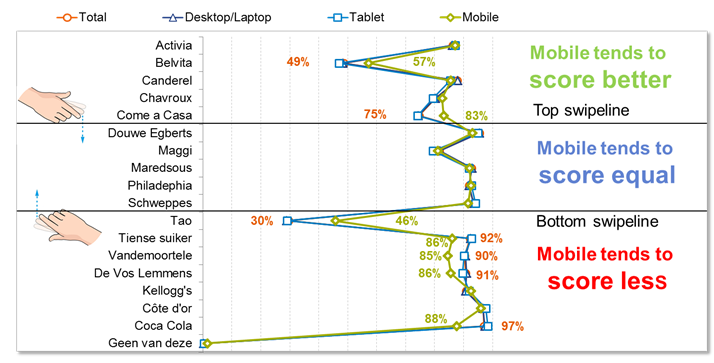
Survey research participation on mobile has impact on set-up, data collection, dropout rates, results ... An important threat is the swipe effect, which raises issues if answer options on a survey question (single or multiple choice) are not all visible on one screen ( i.e., one has to scroll or swipe down to see all the options).

Randomization of answer options might offer a solution to validate relative scores between the options (for example, Coca-cola is better known than Kellogg’s), but not for hard KPIs: Coca Cola aided awareness on computer hits 98%, while on mobile - if only visible after scrolling down, it drops to 88%. The contrary is true as well: top swipeline items tend to score better on mobile.


Source: GfK Belgium, n = 5444, 2014

Thinking mobile (first) and optimizing research for mobile should be any researcher’s concern nowadays. Survey research is only a part of it, it’s the part where we face the challenge of transforming our traditional approach to new devices used by participants. On the other hand, we can also leverage the power of mobile via "research on the go", "research in the moment", "mobile communities" or "location based research".

Researchers or clients often think about location based research in a complicated way (beacons, GPS ...), but one of the best use cases of location based research with mobile might just be TripAdvisor: from location feedback without mobile (evaluate us when you get home) to location based research leveraging the always connected consumer (a poster that says: "evaluate us now").

The mobile evolution: rate us when you get home VS rate us now

The mobile evolution triggers us into thinking mobile (first), but we should be careful to avoid thinking 'mobile only'. An omni-channel research experience, or a device-neutral set-up, should be the starting point.

In the last post of this series, I will dig deeper into the role of mobile in the device mix and the consequences of device switching behavior. For more information or an extended version, feel free to reach out!

donderdag 21 januari 2016

Market Research Digitization part 2: information overload

The digitization of market research (and the society) has been a hot topic for a couple of years now: the year of mobile, the year of big data, the year of social ... we have had them all. Most organizations (and research agencies) have a digital department in some way.

All (digital) evolutions of marketing and market research are however triggered by a consumer trend. In this series of 4 posts, I will share my thoughts on the evolutions of the past years and the impact on market research. With this second post, I will focus on the daily information overload consumers experience.

With the world at our hands, media consumption has drastically changed. Twitter is our main source for news items, hearing something hours after it happened is considered ‘very late’. The amount of available information when looking into a potential purchase is almost unlimited: consumers face the challenge of selecting relevant information and messages.
“The increasing amount of (digital) touchpoints causes an information overload for consumers.”
Market research often ask consumers about their “path to purchase” or “media behavior” via established techniques such as CAWI, CAPI, CATI ... to help marketing departments understand advertisement impact. Exposure to digital banners, pre-rolls ... is however not always actively remembered (which online ads did you see today, yesterday, last week?), neither is online media consumption (which websites - ideally which website pages - did you visit when looking up information about your new microwave?).
"Established research techniques don't capture what is not actively remembered"
With our established techniques, we cannot measure the impact of unconscious media exposure. In order to tackle this challenge, we make the shift from claimed to observed behavior. Instead of surveying research participants we leverage today’s technology to actually observe and register their online behavior and ad exposure.
“By leveraging today’s technology, we make the shift from claimed to observed behavior”
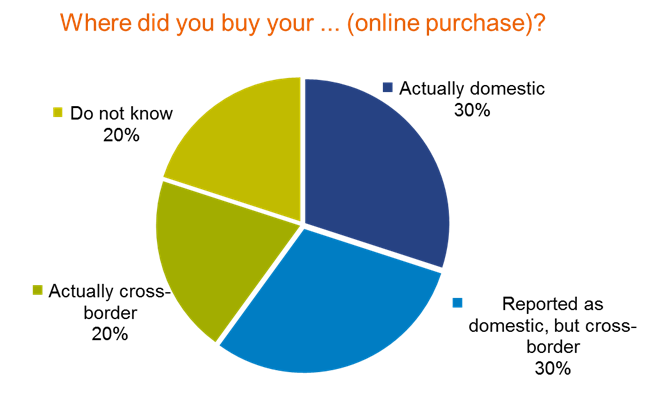
One of the advantages of observed behavior is the ability to compare what consumers think they do (claimed behavior) with what they actually do. When researching cross-border purchase behavior, GfK found for example that for only 50% of online purchases, consumers could correctly tell whether it was purchased domestically or abroad.


maandag 18 januari 2016

Market Research Digitization part 1: market research as a gatekepeer

The digitization of market research (and the society) has been a hot topic for a couple of years now: the year of mobile, the year of big data, the year of social ... we have had them all. Most organizations (and research agencies) have a digital department in some way.

All (digital) evolutions of marketing and market research are however triggered by a consumer trend. In this series of 4 posts, I will share my thoughts on the evolutions of the past years and the impact on market research. Today, we start with the changing role of market research as an information gatekeeper.

A gatekeeper is a person who controls access to something, for example via a city gate. In the late 20th century the term came into metaphorical use, referring to individuals or organizations who decide if a certain message will be distributed by a mass medium.

The role of the gatekeeper

Newspapers, TV stations, radio broadcasting ... are traditional examples of gatekeepers, filtering information towards consumers. Today, consumers are being kept up to date via the web, social media, their mobile ... companies as Google and Facebook have become today's gatekeepers, defining what is (not) relevant for even a specific individual.

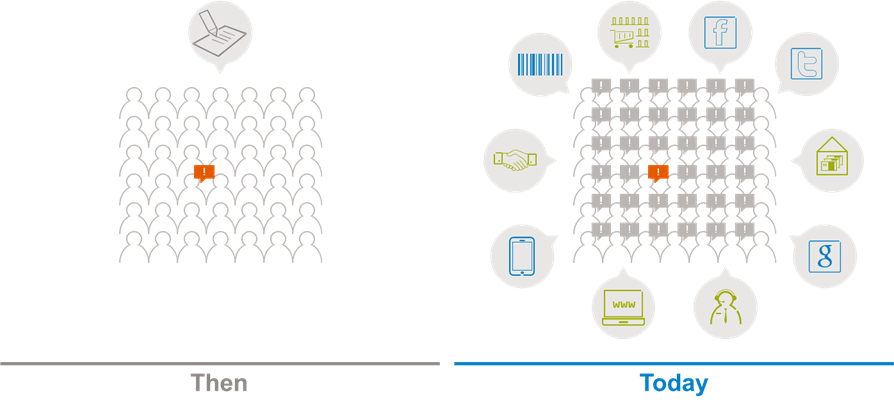
Market researchers used to be such information gatekeepers as well, defining what part of the consumer voice companies got to hear. We collected (and still do so) data via interviews: face-to-face, via telephone or via an online survey. Being heard was a privilege of 8, 12, 250 or maybe 1000 customers, selected by the researcher for participating in consumer research.

Due to the online and mobile evolution, consumers are now able to shout out to the world whenever, wherever they want. The challenge of market researchers is no longer to collect and hear some of the voices, but to isolate relevant from irrelevant ones.

From hearing one voice to isolating the relevant ones (visual: GfK)

In the following posts, we will dig deeper into the impact of "the age of information overload", "the rise of mobile" and "device-switching behavior".

vrijdag 21 augustus 2015

How my OPO represents the global smartphone market

This is my current smartphone. The OnePlus One, or OPO if you like. I have it for about 9 months, and it embodies the 4 major global smartphone trends of Q1 2015.

1. Bigger screens

With a 5.5" 1080p full HD screen, the OPO is without discussion a smartphone with a big screen. Some call it a phablet, some don't. The official minimum phablet size varies between 5" and 5.7". Globally, smartphones with big screens are driving the market growth.

2. The rise of 4G

Having a 4G (LTE) connection is no longer the exlusive right of € 500 + smartphones. Also mid- and low-budget smartphones allow you nowadays to be fully connected on the go. 50% of smartphones sold in Q1 2015 has 4G connectivity.

3. Cheaper handsets

The market of low-end smartphones grew in Q1 2015, the mid-range share remained stable. High-end smartphones lost market share because of this evolution. Low-end smartphones represent over 50% of the global market today.
This evolution is different in Belgium, where the mid-segment is under pressure. Find out more about the 3 Belgian smartphone trends [Dutch].
4. Fast growth of emerging markets

Emerging markets are not only driving the global market growth, but also disrupt the manufacturers' scene. Brands as Xiami, Huawei or Oneplus are no longer exlusive for the APAC region but offer their products worldwide. The markets in Middle East & Africa and emerging APAC are forecasted to grow by 29 to 33% in 2015.

Source: read the full GfK Smartphone market trend report.

maandag 22 juni 2015

According to a study

Some days ago, the internet picked up on one of the very reasons I love market research. A quote, somewhat sarcastic, but build on the eagerness to learn, that shows what market research - among other things - is or can be about.
The belief to research consumers, to research the market, to research trends and evolution, to allow people to not only quote your study or research, but make decisions based on your insights, your recommendations - that is what market research is about.
We help brands to make better decisions, faster.
If you want to quote a study for your presentation, it doesn't matter if it's a sales pitch, a PhD defense (or other papers, articles or books) or speaking to an audience on an event, you can improve it by referring to research in a story-telling way of doing so.

To make an even better impression, here are 3 ways to take it to the next level:

1. Use a percentage
According to a study, 87% of statistics are made up

2. Add 'recent' to the mix
According to a recent study, 83,4% of statistics are made up

3. Show a simple (easy to read and understand) graph
According to a recent study, 81% of statistics are made up

Which statement do you believe?

Credits to (sources): REBRN, see way more

maandag 8 december 2014

Unpacking the digital consumer

With Future Buy, I researched the digital consumer anno 2014 for my employer, GfK. The results of this study are presented on different events such as the Ecommerce Xpo of last week in Kortrijk. Vincent Panneels (@20100panneels) attended this conference and wrote a review / summary of the presentation. You can find the slides and his summary below, enjoy!


Unpacking the digital consumer, GFK’s Future Buy report presented at E-COMMERCE Expo

During its first edition, the fair E-COMMERCE Expo didn’t simply present booths of companies active in the e-commerce or digital industry. Seminars were also organized to enhance the offer of the event and we had the opportunity to follow quite an interesting one, a presentation of the Future Buy report, by Bert Hendrickx of GFK. Of course it was very summarized and quickly presented to fit the seminar format (30 minutes only), but it highlighted quite a few interesting facts.

Be consistent

There were quite a few key facts that were presented. Such as
  • Belgium still seems to be behind its European neighbors when it comes to E-commerce (92% of people do think so).
  • Three out of four also admit they already filed a complaint against retailers or companies through different medias
    • 58% through email
    • 33% over the phone
    • and 25% used the corporate website
The arrival of smartphones allowing to combine different medias in one device, had actually one great impact for companies. Your consumer doesn’t care about the way he is in contact with your company. But he cares about the fact that all communications he has with you, must follow the same consistency.
Consistency needs to be applied on all channels of communication. And that is the essential impact of omnichannel.
Also, be sure that the omnichannel approach is coming to your category. Maybe today some categories are more impacted. For example, it is the case for fashion or technical goods. Those categories experience more the impact of pure players (e.g Zalando, Bol.com…). But in the future, all categories will be impacted even the ones who seem behind today (e.g. Healthcare, education, automotive…).

Who is the Xtreme shopper?

Actually, consumers using mobile to do their purchase or interact with companies and retailers, needed to be analyzed a bit more. For this study, GFK took a closer look at the group they qualify as Xtreme shopper. These are consumers you need to consider for the future, as they are young and here to stay. GFK uncovered three key findings
  • Staying away is the new loyalty: A happy shopper doesn’t necessarily come back to your online store if he is happy with his purchase. However, if one has a bad experience with your shop, one necessarily will never come back.
  • Offline drives on experience: real physical stores need to play on the experiences a shopper cannot have online. So far, being stimulated with smell, taste, or touch are not experiences one can enjoy online.
  • Make online more personal: Online stores have many different information, even unique personal information about their customers. So online retailers should take advantage of the information they have in order to make the shopper’s experience more personal and tailor-made.

Don’t forget your mainstream shopper

Very well said by the speaker. Online is here to stay, but don’t forget the mainstream shopper visiting your stores. From this short presentation, we learnt a few key points from the study about online shoppers and e-commerce. And these will certainly bring more fuel to the engine of the “clicks and bricks” debate. In my opinion, the future will be successful for the companies and retailers who still think of making unique experiences of both online and physical stores. Just remember, consistency is key.

donderdag 9 oktober 2014

The (Social) Science of complaining

I wrote this post originally for the GfK blog. GfK is a global market research agency, and my employer. You can find the original post here.


Remember that time you wrote a letter and sent it to your energy provider because you were unsatisfied with your bill? The digital evolution has caused a lot of changes in the (corporate) world, while the rise of Social Media has taken away the role of ‘gatekeepers’, holding off information, or complaints.

3 out of 4 Belgians have complained at least once, and more and more these complaints are taken to Social networks such as Twitter and Facebook. They reach out, not only to manufacturers, retailers or service providers, but also to millions of other consumers. This requires a whole new approach from the company to the complainer.

While more traditional channels are still the most popular way of voicing complaints in Belgium, Social Media is definitely on the rise. E-mail (58%), telephone (33%), and corporate websites (25%) are the most popular channels due to the easier access for the elderly. It might not come as a surprise that the younger generations (even up to age 44) turn more towards Social Media.


In general, 6% of Belgian consumer has used Social Media to file a complaint to a company, just under the United Kingdom (7%). However, of all youngsters (15 – 24) who have send out a complaint, 18% used Social Media to do so. Facebook is the most popular platform amongst all generations, with Twitter being second. Other social networks (Instagram, LinkedIn, Google + …) are almost never used, however they are also on the rise with consumers under 25 (3%).

Social Media as a megaphone after not being heard

We took a closer look at the complaints shared via Social Media. Half of them were ‘fresh’ complaints, where Social Media was used as the preferred channel to reach out to companies. The other half of the complaints via Social Media only ended up there because of no or insufficient reaction on earlier attempts via other channels such as telephone or e-mail.

It’s no wonder then that one of the main drivers of using Social Media as a compliant channel is to (finally) get into contact with the company: 1 in 4 did not receive any or a sufficient reaction via other channels, also 1 in 4 states to use Social Media as a ‘last resort to get into contact with the company’. This is linked directly to the fact that people use Social Media as a form of ‘peer pressure’: almost 4 out of 10 states ‘reaching as many people as possible’ as an important driver.

Speed is however the most common reason to use Social Media: not only do consumers expect faster response (42%), but also a faster actual solution (33%). At last, Social Media is perceived as more convenient than other channels (29%). These drivers behind Social Media usage are the same regardless age, gender, social class …


Complaints via Social Media are likely only to grow over time. Today, half of those complaints however could have been avoided if sufficient earlier follow-up via other, more traditional – private – channels would have taken place. Because of the social aspect and the disappeared gatekeeper, Social Media is driving companies to handle complaints faster, better and with more open communication.

woensdag 27 augustus 2014

4 Market Research Quotes


Neil Alden Armstrong (1930 - 2012) was an American astronaut and the first person to walk on the Moon. He was also an aerospace engineer, naval aviator, test pilot, and university professor.


Byron Sharp is a Professor of Marketing Science at the University of South Australia. He is also the Director of The Ehrenberg-Bass Institute for Marketing Science, one of UniSA's research institutes.


Zora Neale Hurston (1891 - 1960) was an American folklorist, anthropologist, and author. Of Hurston's four novels and more than 50 published short stories, plays, and essays, she is best known for her 1937 novel Their Eyes Were Watching God.


Wernher Magnus Maximilian, Freiherr von Braun (1912 - 1977) was a German and American aerospace engineer and space architect.